Welcome to

Premium Construction Solutions
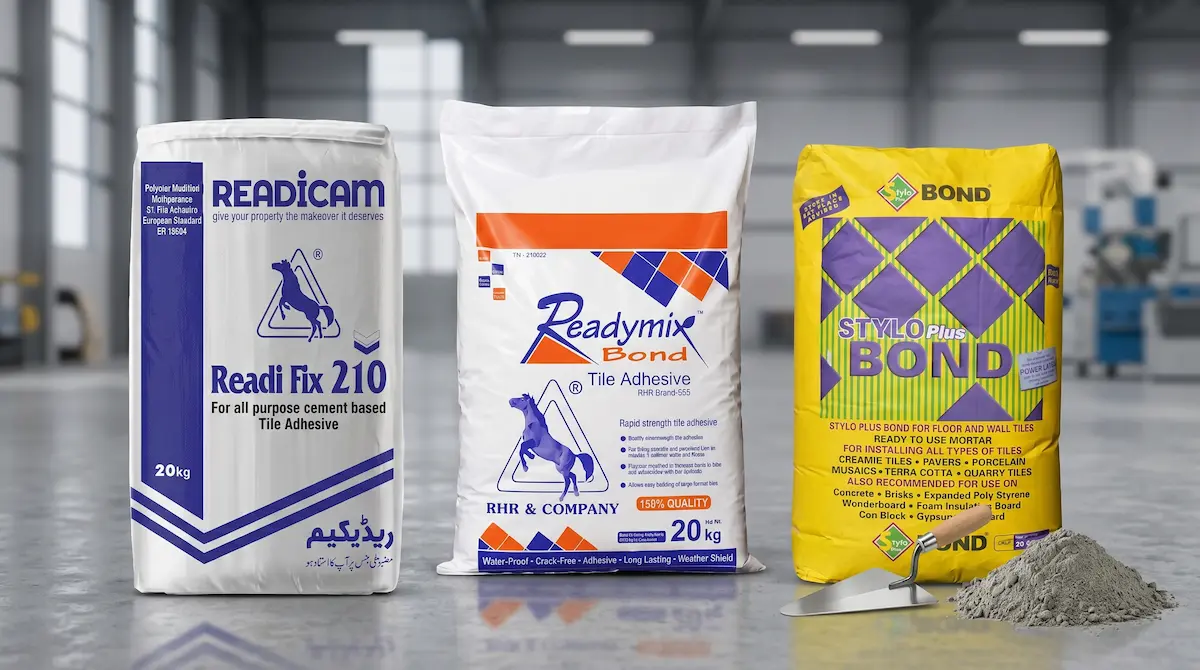
When it comes to tiling, the adhesive you choose is just as important as the tiles themselves. A stunning porcelain floor can quickly become a costly disaster if the wrong adhesive is used, leading to cracked grout, loose tiles, and compromised safety.
The Science of Tile Adhesives
In the past, simple cement and sand mixtures were enough for porous ceramic tiles. However, modern manufacturing has shifted towards incredibly dense porcelain and natural stone tiles, which have water absorption rates of less than 0.5%. Because they do not absorb moisture, standard cementitious adhesives (C1) simply cannot grip them.
"Using a C1 adhesive on a large-format porcelain tile is a guaranteed failure. You must use a polymer-modified C2 adhesive to ensure a chemical bond, not just a mechanical one."
1. Understand Your Tile Type
For porcelain, you must use a high-performance C2 adhesive like ReadyMix Tile Bond or Readicam. These products contain advanced polymer modifiers (redispersible polymer powders) that create a flexible, extremely strong chemical bond capable of holding dense materials securely in place.
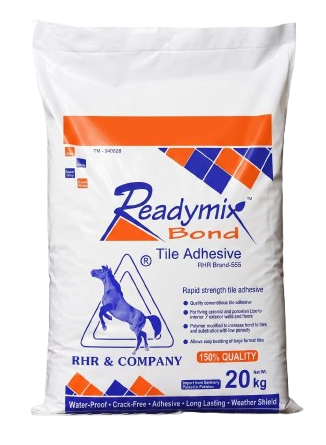
2. Consider the Substrate and Movement
Are you tiling onto concrete, plaster, or existing tiles? Different substrates require different adhesives. If you are tiling over existing tiles or onto a wooden substrate that may experience slight movement or vibration, you need a highly flexible adhesive.
- Total Tile Bond: Best for high-traffic commercial floors.
- Stylo Plus: Engineered for large-format wall tiles (up to 90x90cm) to prevent vertical slip.
Environmental Factors
If you are tiling a swimming pool, a wet room, or an outdoor patio exposed to the harsh Pakistani summer, temperature fluctuations and water resistance become critical. In these scenarios, combine your adhesive strategy with proper waterproofing like Aqua Shield.
At RHR & Company, we engineer our adhesives to withstand extreme conditions. If you are ever in doubt about which product to use, our technical team is always ready to provide expert guidance and on-site testing for your specific project requirements.